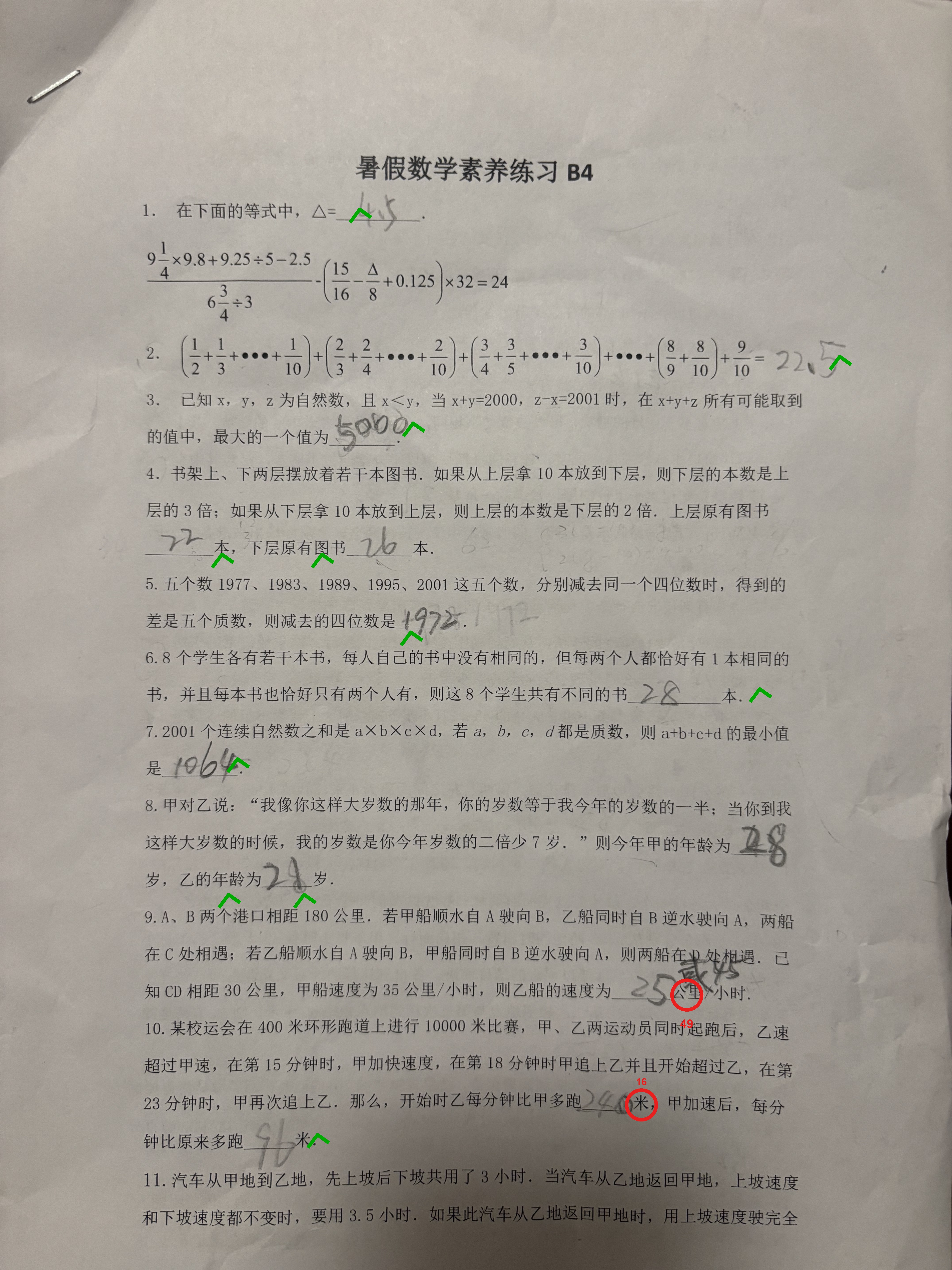
Handed a photo of a child’s summer math worksheet, Xiaohe read the handwriting, graded all ten visible problems, marked the two wrong answers, and produced a 6-minute voiced lecture that explains exactly how to solve them.
Watch the lecture
6:00 · 1920×1080


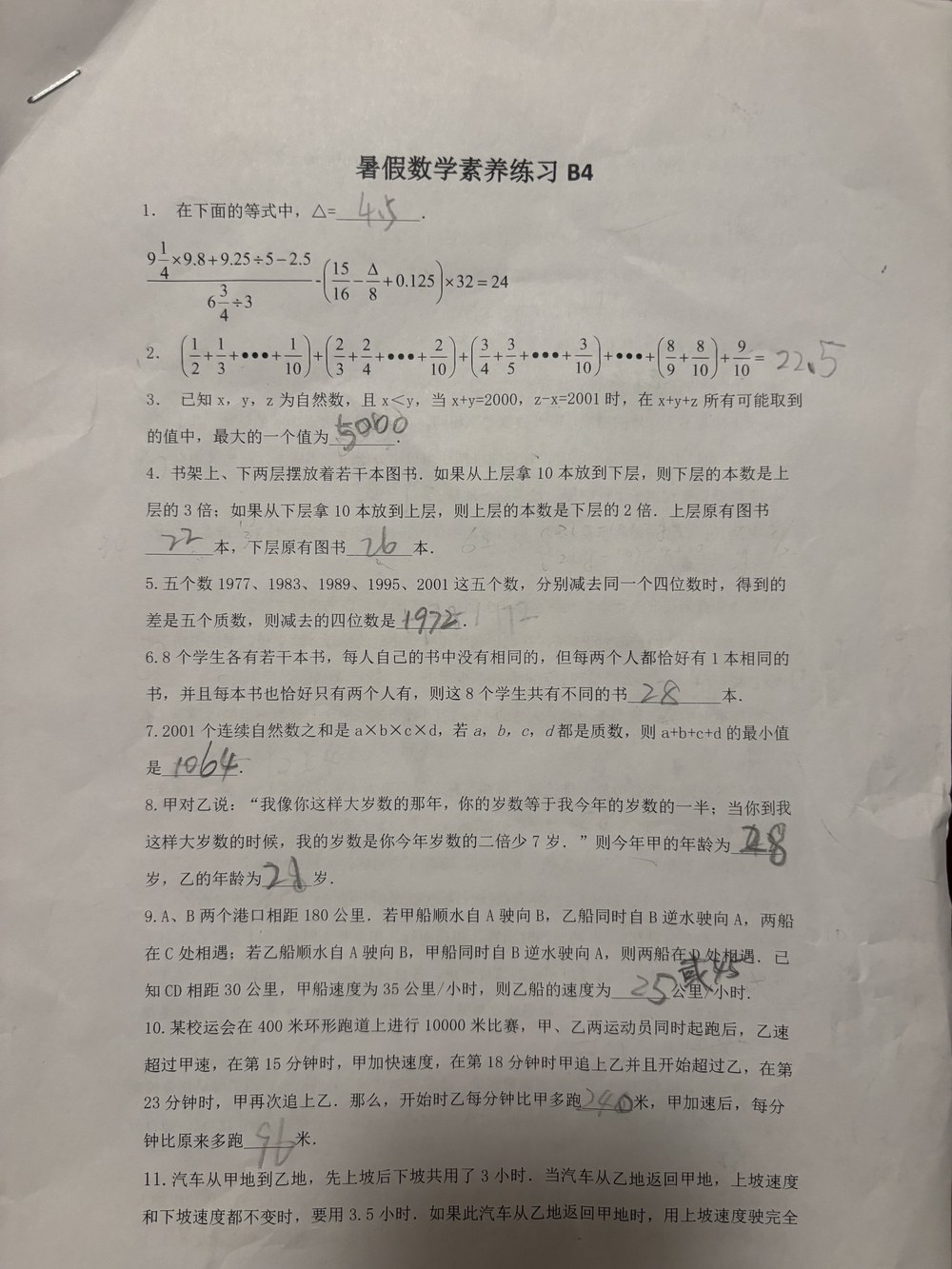
A user handed Xiaohe a phone photo of a child’s summer math worksheet — ten problems, each with a handwritten answer in the blank. The ask: grade it, then turn the two wrong problems into a short lecture video.
Reading the handwriting was the first hurdle. The photo is a large HEIC, the page is photographed sideways, and the answers are pencil-thin. Xiaohe rotated the page upright, then used a vision model together with local OCR to transcribe every printed problem and every handwritten answer.
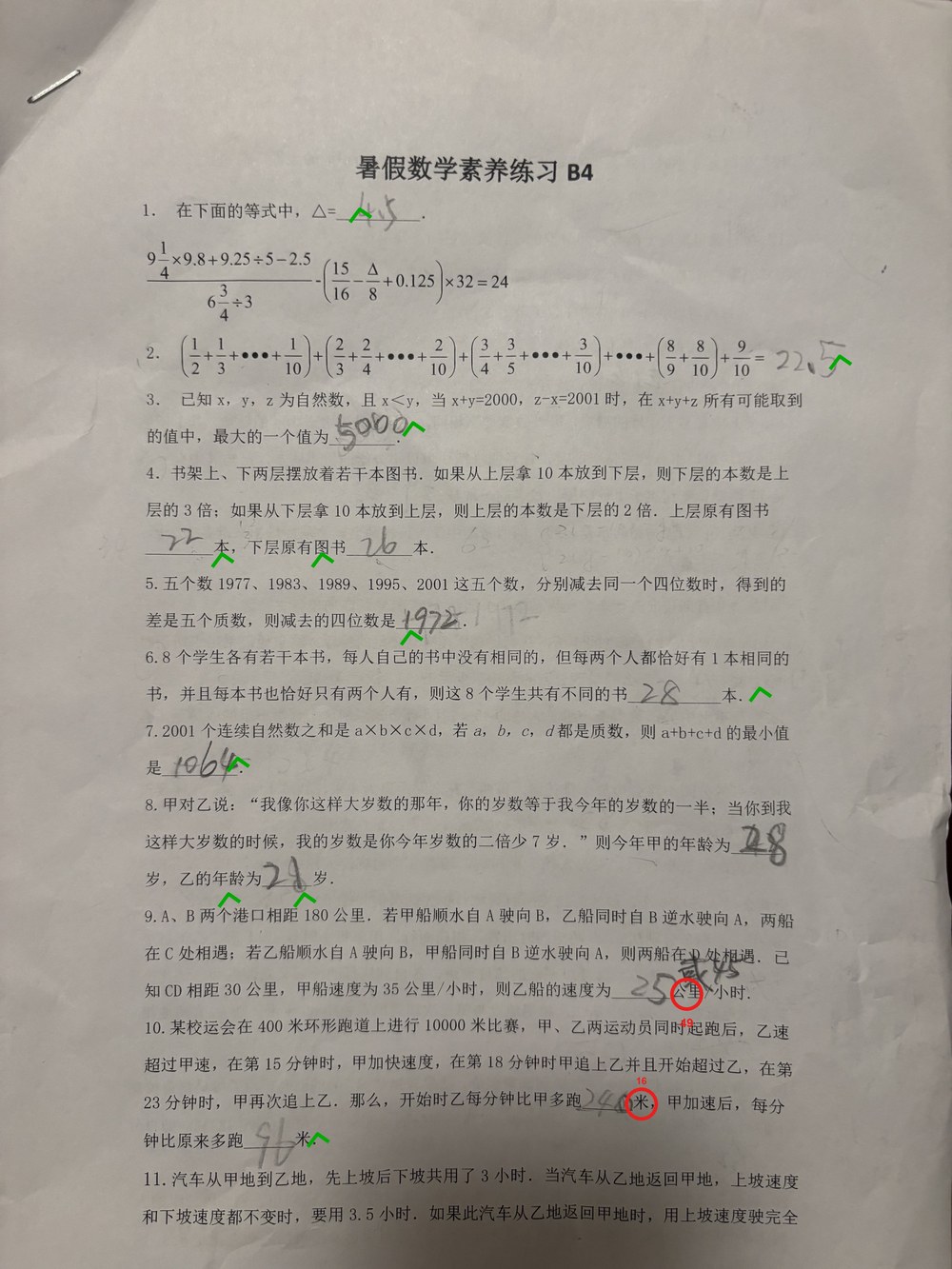
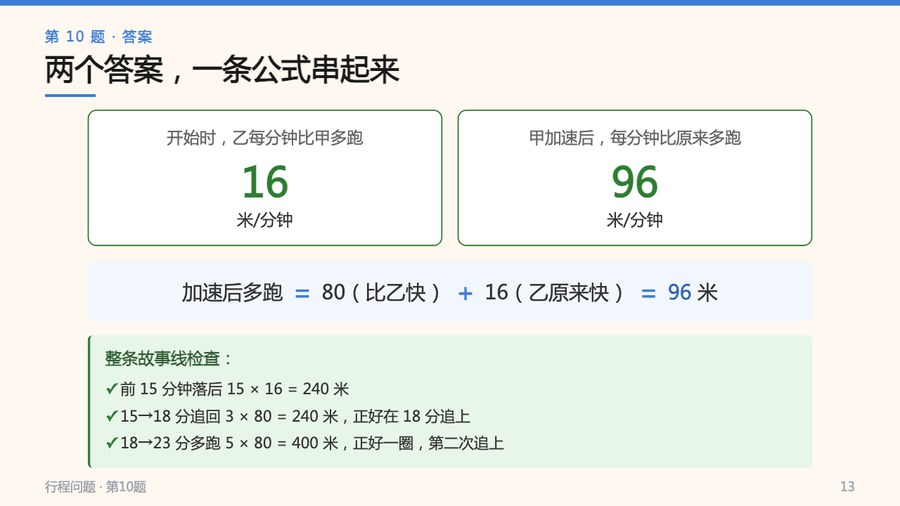
Xiaohe solved all ten problems and found two errors: Q9’s second value (45 should be 49 — the two cases need both boat speeds) and Q10’s first blank (240 should be 16 — 240 is the total gap at minute 15, not the per-minute rate). It marked the photo, then built a 13-slide lecture and a 6-minute voiced video walking through both problems for an elementary student.
1. Read the photo
HEIC → portrait orientation; Apple Vision and qwen-vl transcribe the printed problems and the handwritten answers.
2. Grade
Solve all ten problems; settle two ambiguous handwritten readings by inspecting tight crops pixel by pixel.
3. Mark the scan
Green ✓ on the correct answers, red circles plus the correct answers beside the two mistakes.
4. Build the lecture
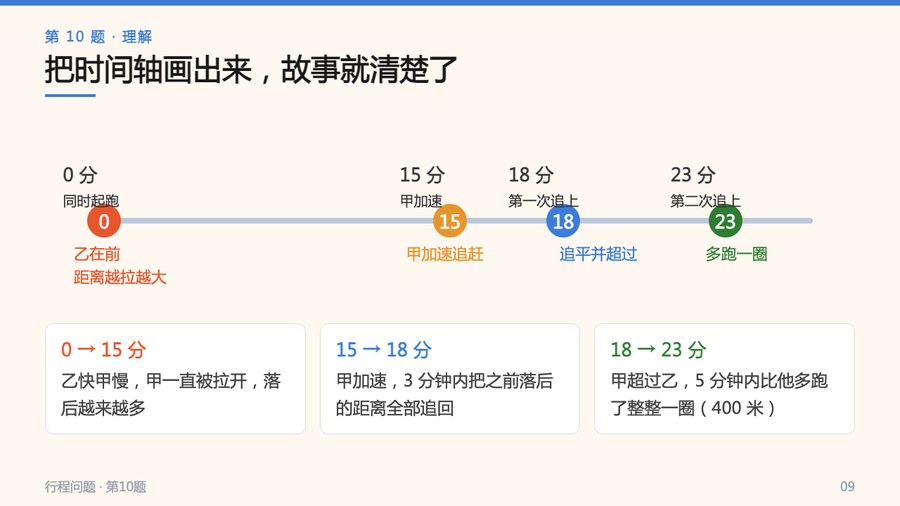
lecture-agent writes 13 HTML slides — river and track diagrams, a timeline, step-by-step arithmetic in large type.
5. Narrate
Doubao TTS reads a 6-minute walk-through written in plain language for elementary students.
6. Assemble
HTML → PNG frames and SVG → PPTX; PNG frames + page audio → 1920×1080 MP4.
7. QA and deliver
Rendered the PPTX to catch text-box overflow, then shipped the video, deck, and graded image back to the source folder.
More works
Real tasks, from the terminal to a finished document.